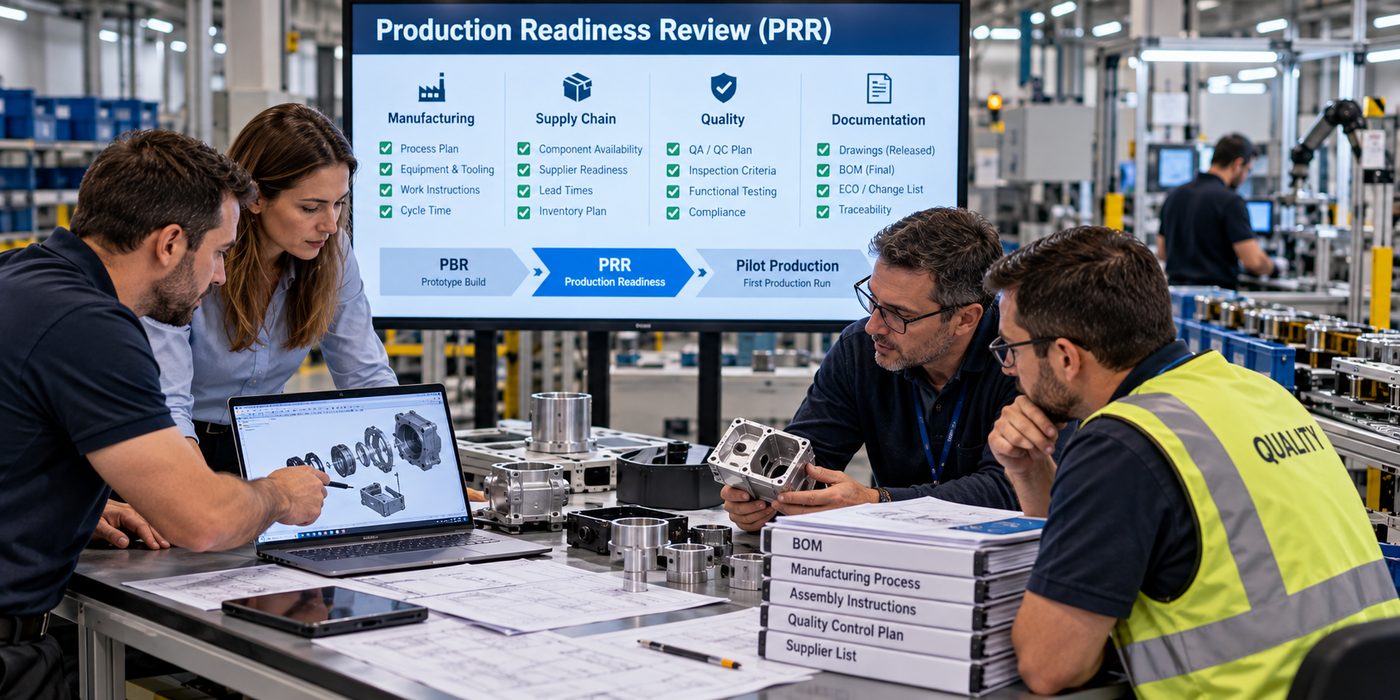
At PBR we built the prototype and checked physical fit and function. The next stage is the Production Readiness Review (PRR), which checks that the system is ready to enter production. The product is already a working prototype and a candidate for series production, and the team confirms that the manufacturing, purchasing and quality chain is ready to run.
What happens at PRR
The goal is to confirm that the whole system is ready for full production, beyond the prototype itself. The stage brings all the teams together: engineering, manufacturing, quality, purchasing and sometimes customers. Together they verify that every component, tool and process meets the requirements.
Manufacturing process
All manufacturing processes are checked to be defined and ready: machine setups, assembly equipment, work instructions and fit checks. Setup and run times are also checked against the targets.
Purchasing and logistics
The required materials and components are confirmed to be in stock and to meet the quality specification, and supply is confirmed to be stable. This prevents delays and faults in production.
Quality checks and functional verification
QC and QA processes are reviewed along the entire production chain. The checks include functional tests, measurements, durability tests and control of every quality standard that was defined.
Documentation and approvals
Reports, technical specifications, change lists (ECO) and assembly instructions are prepared. Every process and conclusion is documented so it can be repeated exactly and improved later.
Why PRR matters
- It verifies that the whole chain is ready for series production, with no surprises.
- It prevents expensive mistakes that could reach products in the market.
- It coordinates the engineering, manufacturing, quality and purchasing teams.
- It gives managers and customers grounds for confidence that the product is ready for production.
How PRR works in practice
There is usually a formal review meeting that covers:
- Manufacturing reports and QC processes.
- Availability of components and raw materials.
- Functional test results and process demonstrations.
- A list of proposed changes and the supporting documentation.
At the end of the review, the decision is whether to start series production or make final adjustments before launch.
Summary
At PBR we built and tested the prototype. At PRR we confirm the product is ready for series production and reliable enough to reach customers. The next stage is Pilot Production, the first production run, where the manufacturing process is tested in practice for the first time.