
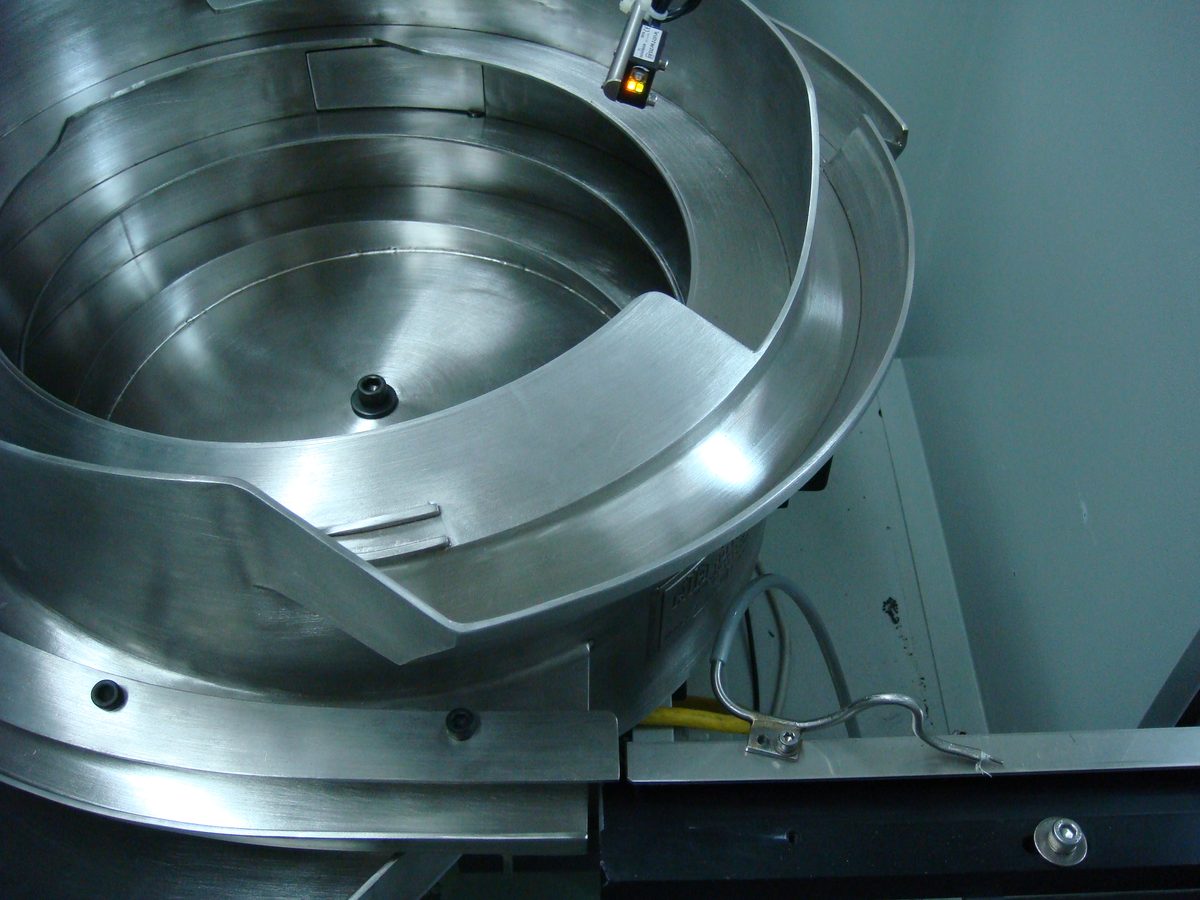
Dedicated mechanisms
Feeding, conveying, positioning, folding, bonding and assembly.
Automation machines and systems designed around your production process: from improving a single operation to a custom machine with drives and robotics.
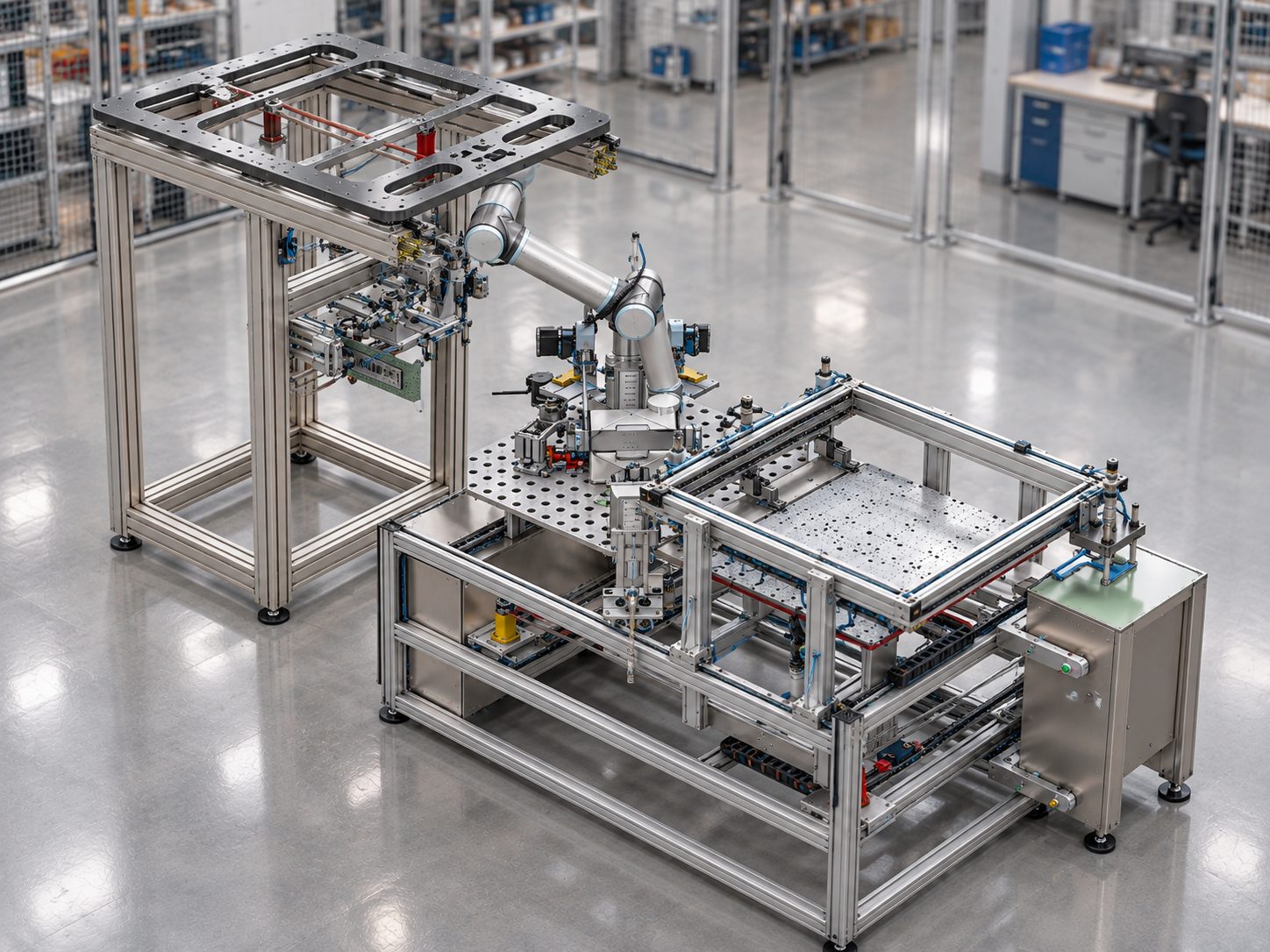
A good machine takes the repetitive and strenuous operations off the operator, and leaves them the work that needs judgment.
It can be a mechanism that performs one operation, a dedicated machine, or a robotic cell that performs several operations in sequence. The cycle time gets shorter and the result is more consistent.
The decision also depends on volumes, cost, operating complexity and payback time.
A repetitive manual operation that limits the production rate.
A process that requires accuracy, positioning and repeatability.
Operations that are strenuous or dangerous for the operator.
A need to combine several operations in one machine, or to handle products of different sizes.
Before designing a machine, we map the sequence of operations, the product, the cycle times, the working conditions and the existing equipment.
The solution follows from that: a new machine, a robot with gripping mechanisms, drive and pneumatic systems, or the conversion of a manual process. The scope is set by the needs and constraints of each project.
The scope changes from project to project. At every stage we also check the fit with the product, the operators and the production floor.
We map the workflow, materials and sizes, throughput targets, interfaces and space limits, and define what the system needs to do.
We choose a working principle and design the mechanisms: feeding, positioning, gripping, motion and unloading, with sensors, drives and robotics as needed.
We build and test assemblies and grippers, and make sure all operations run as one sequence. Maintenance access and safety are part of the design from the start.
We run work cycles, solve faults and bottlenecks, and update the design and documentation before the machine goes into the line.
The technology is chosen by the operation it needs to perform.
Feeding, conveying, positioning, folding, bonding and assembly.
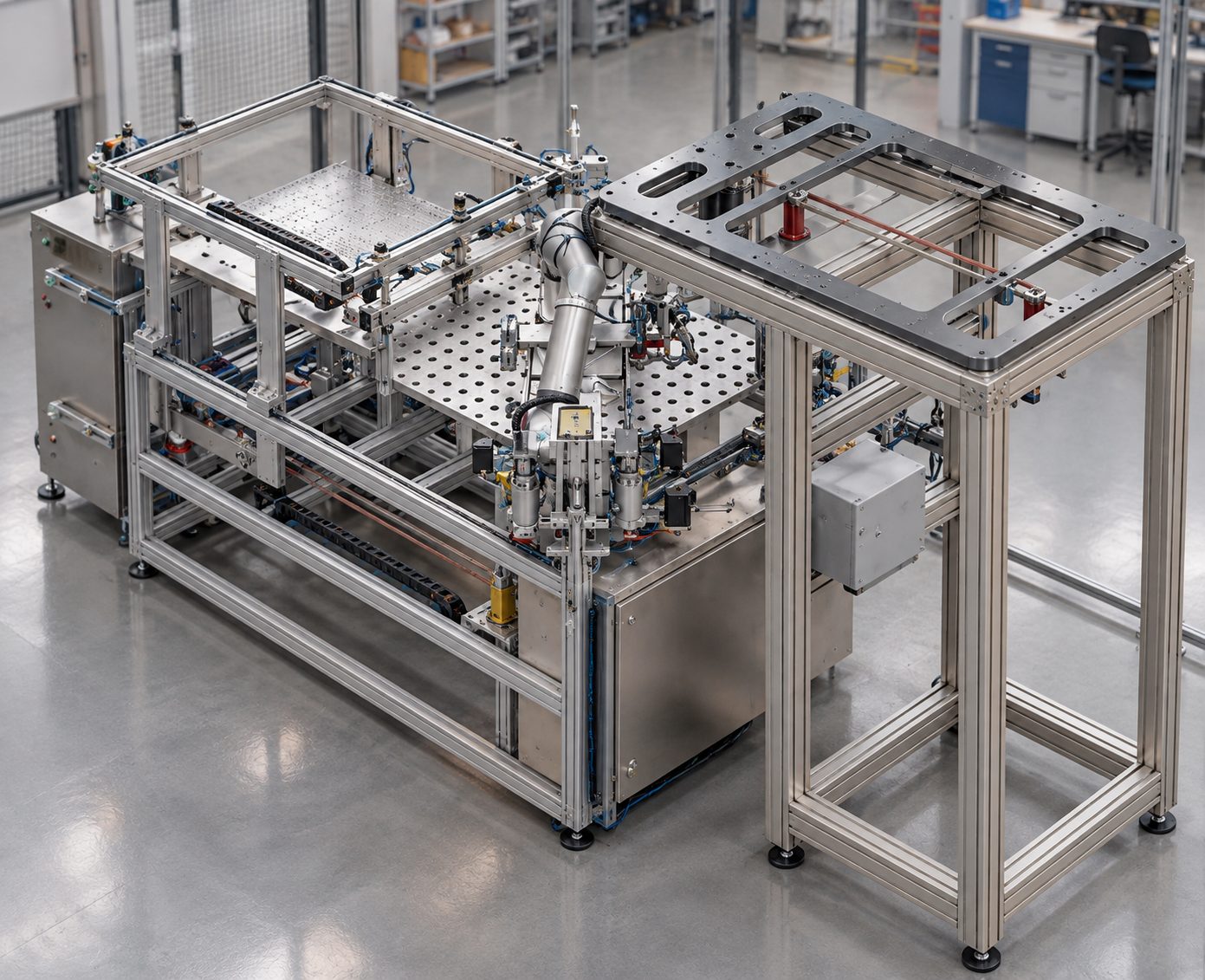
Robotic arms, grippers, vacuum, pneumatics and sensors.
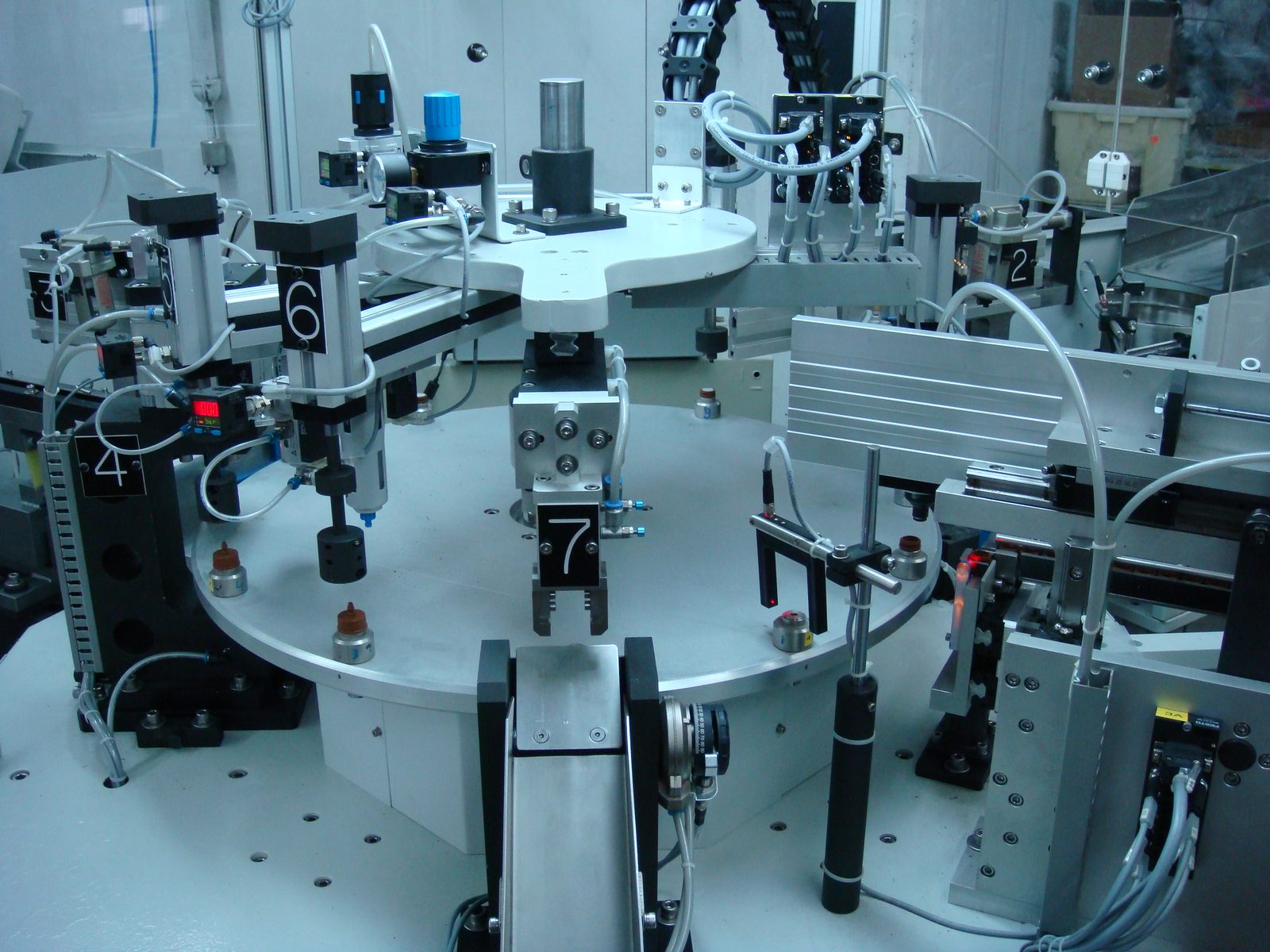
Cycle times, product changeover, operator access, maintenance and connection to existing equipment.
FIZE Medical
The machine wraps medical trays in a drape sheet: it spreads the sheet, feeds the tray, folds the sides and seals the wrap. Inside it is a six-axis robot with interchangeable grippers.
Bluran
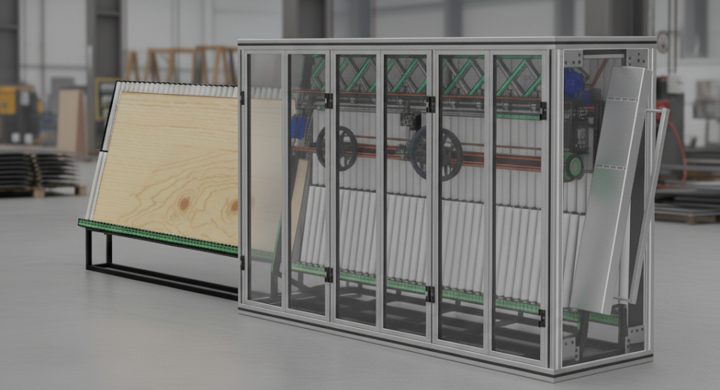
The machine detects the size of each front and adjusts itself automatically, with no manual setup between units and without stopping the line.
What the operation is, what the product is and what rate you need. We will get back to you with possible solutions.